
My passion for precision and for appraising jewellery, vintage watches, silver and antiques has its roots in my family. My father, a master instrument maker and inventor Jan Walma, taught me from an early age that true craftsmanship begins with attention to detail, precision and respect for the craft. These values still form the foundation of Walma Valuation Services.
On this page, I share not only the story behind the famous Walma Mystery Clock, but also the remarkable inventions that preceded it and the technical legacy that laid the foundation for my passion for valuation.
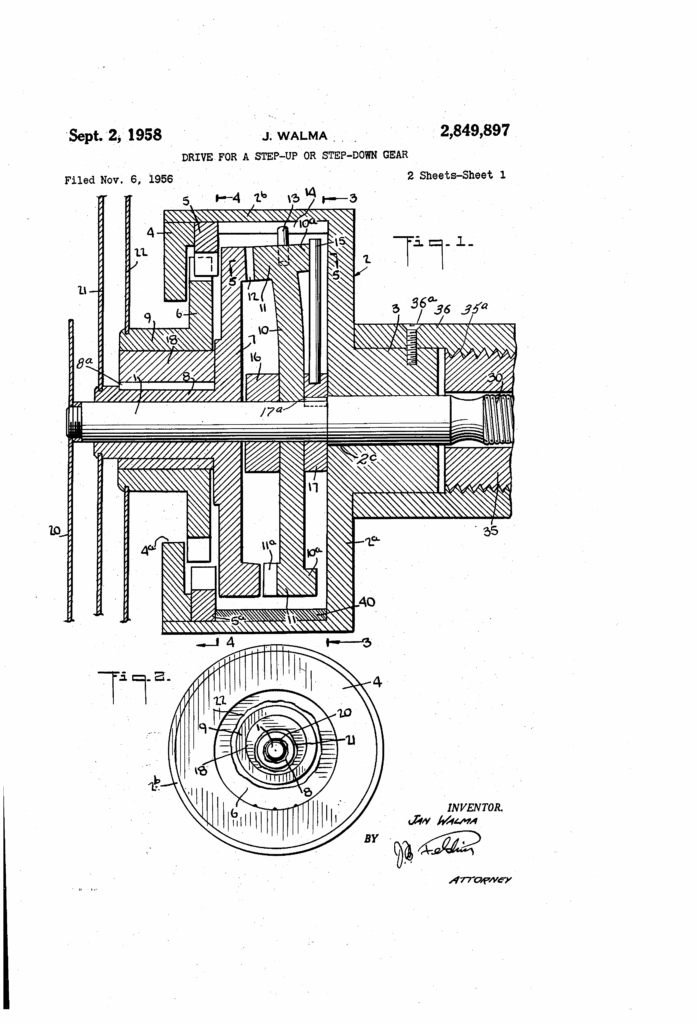
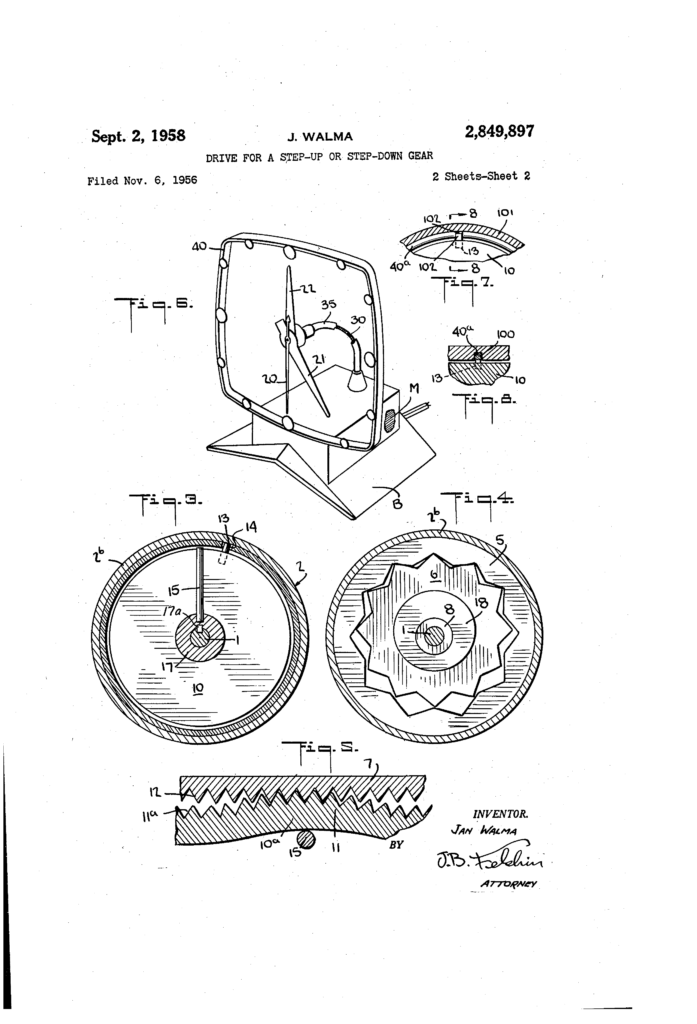
The First International Invention
Even before the development of the Walma Mystery Clock, Jan Walma developed a revolutionary mechanical drive system. 6 November 1956 an American patent application was filed. The patent US 2,849,897 – Drive for a Step-Up or Step-Down Gear was granted on 2 september 1958.
De uitvinding beschrijft een ingenieuze tandwielconstructie waarmee een draaiende beweging nauwkeurig kan worden versneld of vertraagd. Dankzij de bijzondere geometrie van de tandwielen ontstaat een zeer gelijkmatige, vrijwel spelingsvrije overbrenging. Het systeem was geschikt voor precisietoepassingen, waaronder klokken en andere mechanische aandrijvingen. Er zijn in de Verenigde Staten totaal 2 miljoen exemplaren van verkocht.
According to the family history, Jan Walma travelled to the United States in 1957 with the Holland-America Line to negotiate with Jefferson Electric to negotiate the rights to this invention. Jefferson subsequently acquired the patent. This marked a remarkable chapter in the history of the Walma family.
USA Reference Page by Roger Russell: Walma Mystery Clock
From Invention to the Walma Mystery Clock
After developing the patented step-up/step-down gear system, Jan Walma turned his attention to a new challenge: designing a clock whose hands appeared to float freely in mid-air.
Drawing on his many years of experience as a master instrument maker, he developed a unique mechanical system in which the drive mechanism remained completely hidden behind a transparent clock face. This resulted in what is now known as the Walma Mystery Clock.
For the transparent discs, he collaborated with Royal Delft (De Porceleyne Fles), while Jan Walma himself designed and manufactured the entire mechanical heart of the clock and meticulously adjusted it by hand.
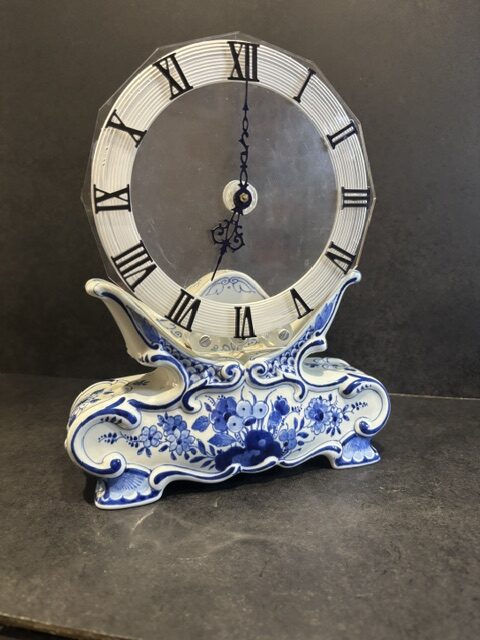
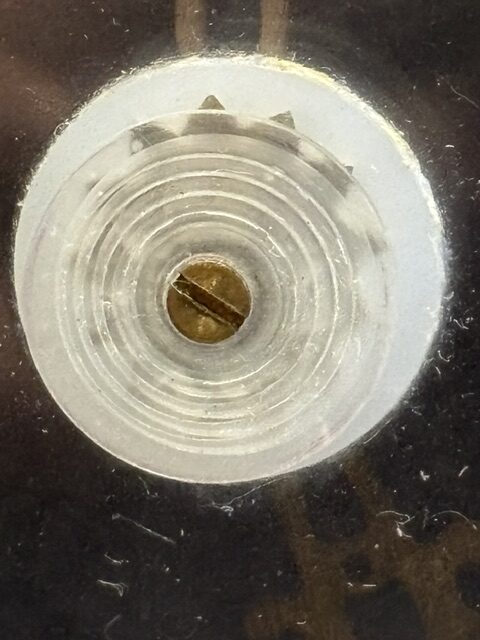
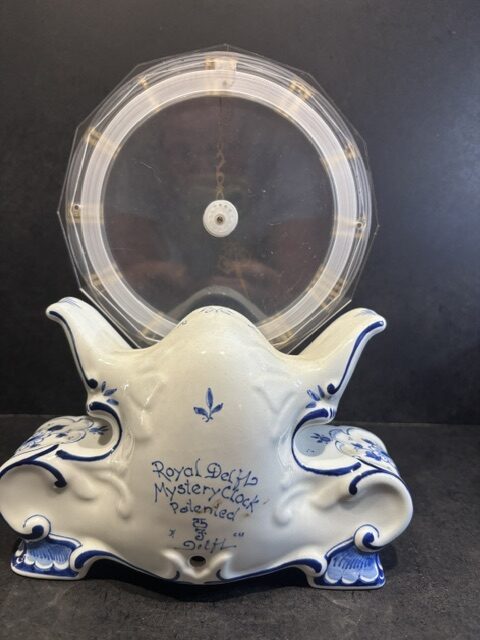
An original Royal Delft Walma Mystery Clock, featuring Jan Walma’s patented mechanism.
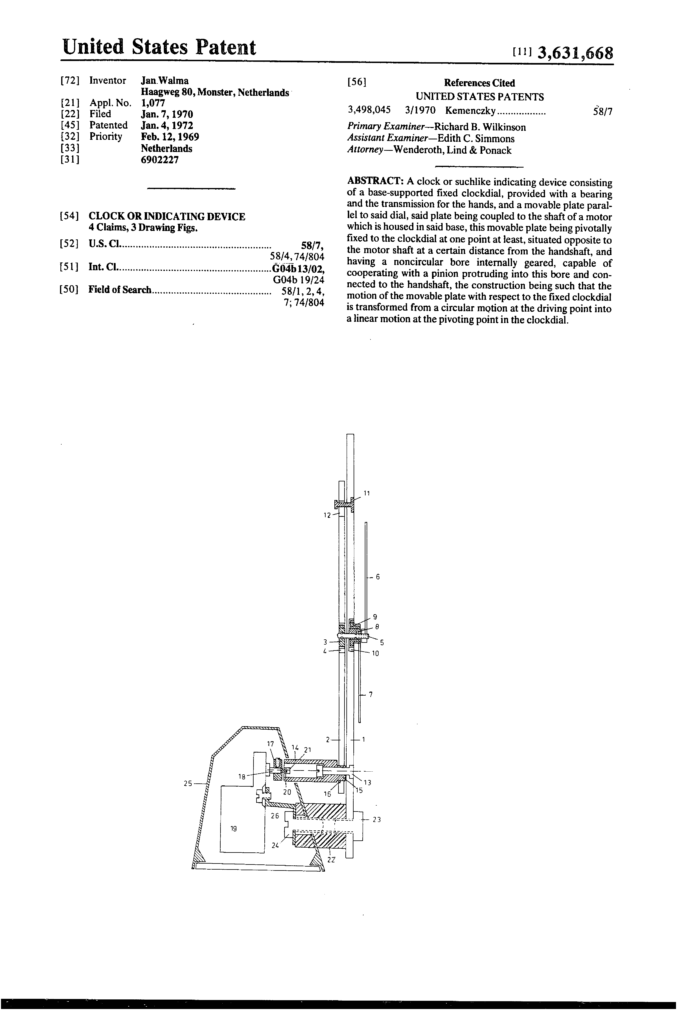
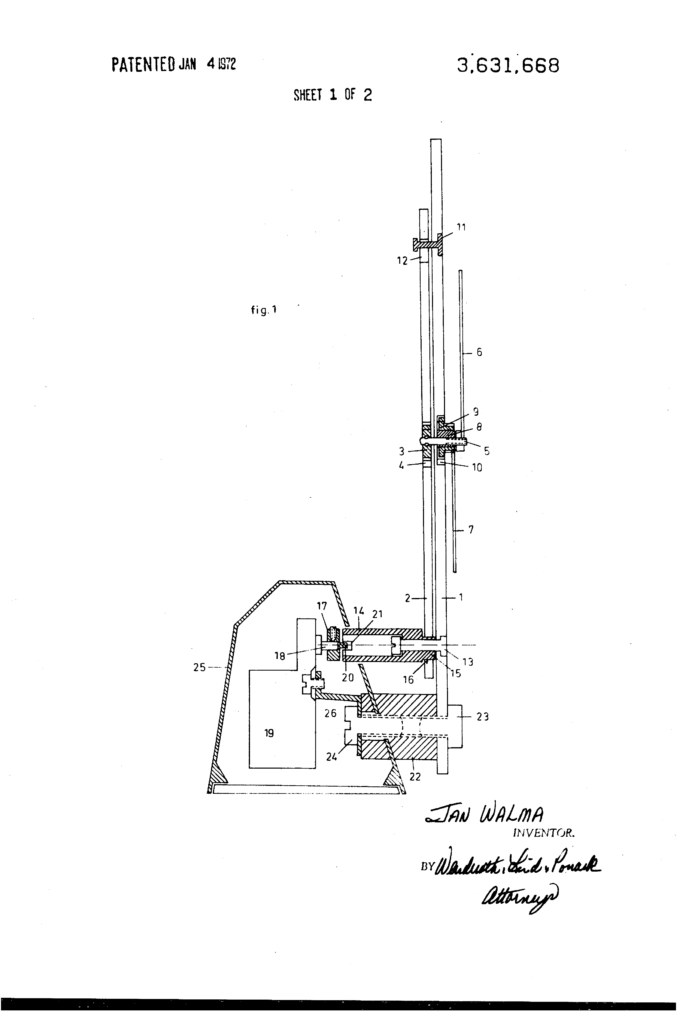
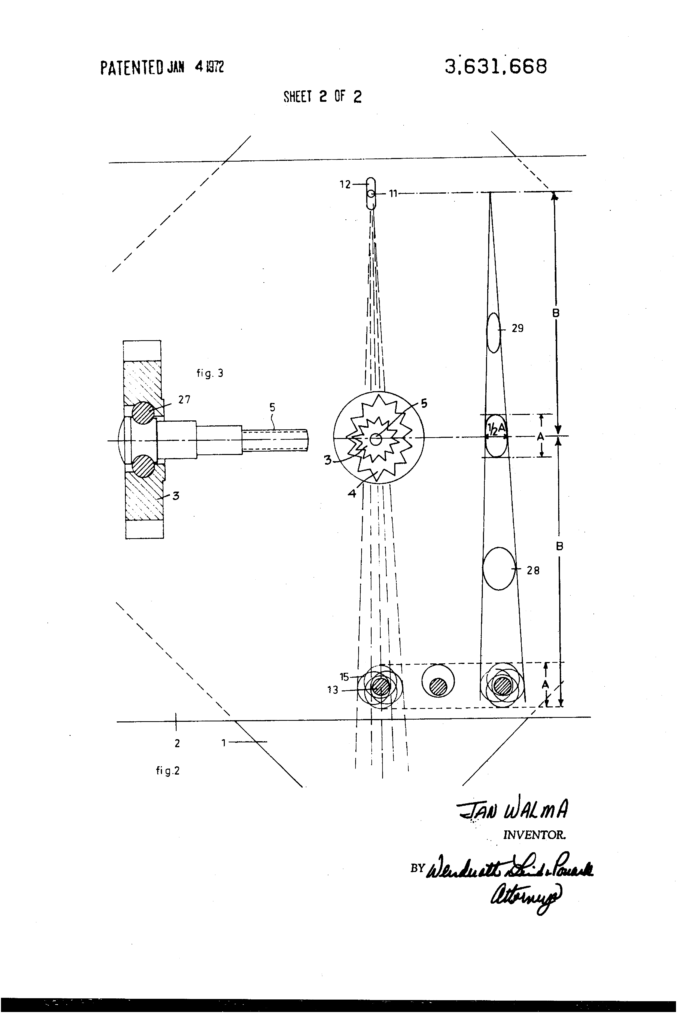
At 4 January 1972 werd het Amerikaanse patent US 3,631,668 was granted for the Walma Mystery Clock. This patent describes the innovative mechanism that makes the hands appear to float, while the drive mechanism remains completely hidden from view.
“Craftsmanship is more than knowledge alone. It is an eye for detail, respect for the craft, and a passion for recognising true value. These values have been part of the Walma family for generations and still form the foundation of Walma Waardebepaling today.”